
Know your load. Run healthy.
Training load builds up in more ways than mileage. Stryd tracks the metabolic cost of every run, the mechanical stress on your legs, and changes in how you move — so you can manage your load and keep running consistently.
Three kinds of load. One pod.
Staying healthy means watching more than mileage. Stryd tracks the metabolic cost of your training, the mechanical stress on your body, and how your stride changes from your own baseline.
Running Stress Score & RSB.
Running Stress Score quantifies the stress of every run in a single number that accounts for volume and intensity. Running Stress Balance tracks long-term against short-term stress, so you stay in productive zones without overreaching.
Impact Loading Rate & Lower Body Stress.
Impact Loading Rate tracks how quickly your body absorbs force with each step, through downhills and sprints. Lower Body Stress Score monitors the mechanical load on your legs, flagging large changes that could signal a problem.
Balance metrics & Footpath.
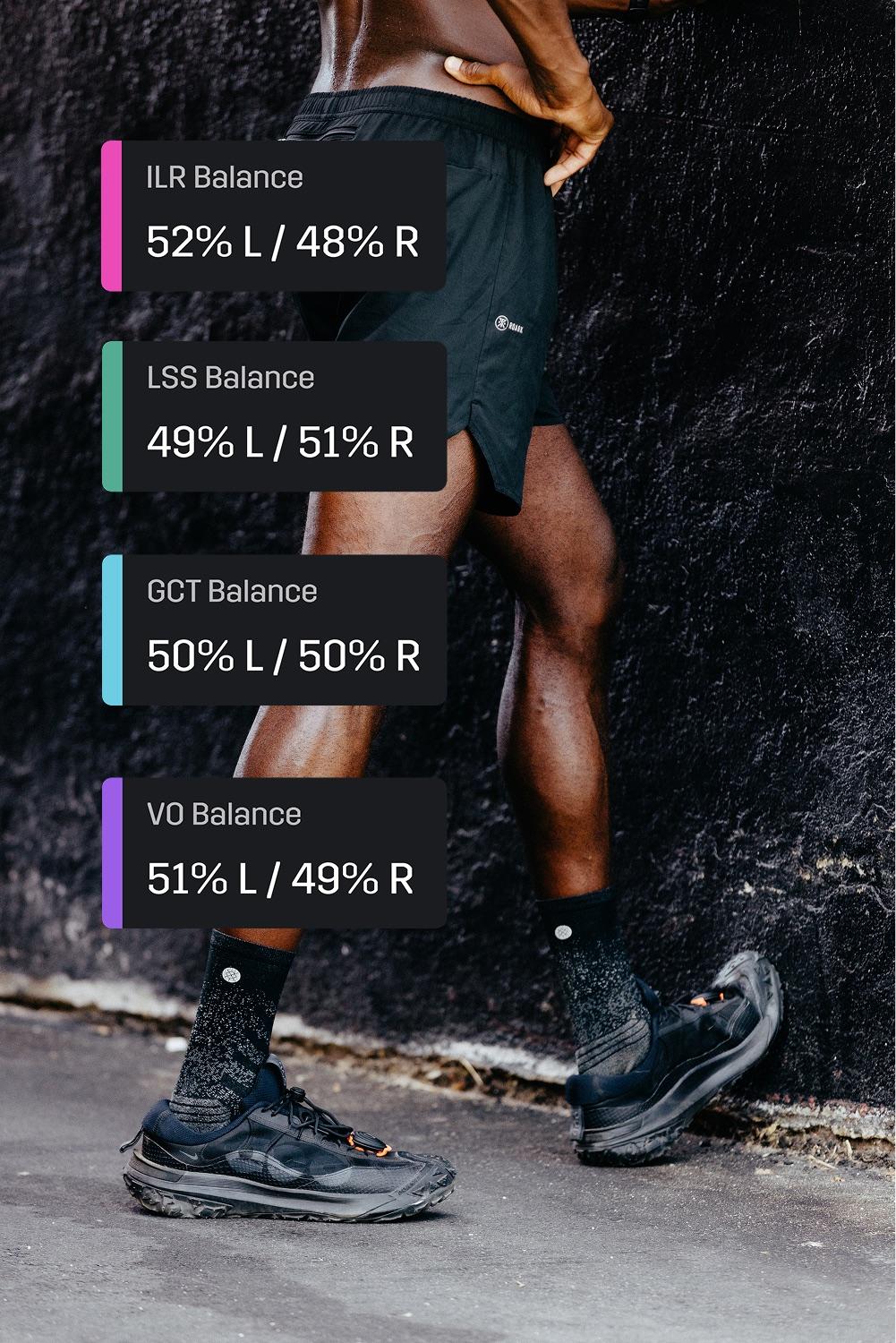
Balance metrics compare your left and right side, and Stryd Footpath visualizes your stride. Together they show when you deviate from your baseline, so you can understand an asymmetry and adjust your training.
Train smart. Spot the signal. Stay healthy.
Running health isn't a single warning — it's a continuous loop that turns every run into a checkup.
Baseline
Consistent running establishes your personal footpath and balance baseline — what your healthy stride looks like.
Monitor
Every run, Stryd tracks your form, load, asymmetry, and stiffness against that baseline.
Spot
When a metric drifts outside your normal range, you'll see it in your data early.
Adjust
Pull back, change shoes, add a drill, or take the day off. Roll on once your form returns to normal.
Footpath tells you what your body can't say yet.
Stryd Footpath turns each step into 3D movement tracking — so trends emerge in your data before they show up in your gait.
- Returning from a break. Quantify subtle changes in your stride and see when it is back to your baseline.
- Fatigue monitoring. Watch how and when you fatigue across a run and across a week. Tailor training to combat the patterns Stryd surfaces.
- Shoe-driven changes. See how each pair reshapes your footpath. A new shoe that's silently breaking your stride? You'll know.
- Indoor and outdoor. Footpath works on the treadmill, the trail, the track, and the road — the data doesn't care where you run.

Balance metrics, left and right.
Stryd Duo measures both feet and streams their data in real time, so you can see how each side of your body is working.
- Leg Spring Stiffness Balance. How well each leg absorbs and returns energy. A persistent skew is worth paying attention to.
- Ground Contact Time Balance. Are you holding the ground longer on one side? Often an early sign of compensation.
- Vertical Oscillation. Track how much your body bounces. Big increases under fatigue are a load warning.
- Impact Loading Rate Balance. How quickly each leg takes on force when your foot lands. A side that consistently loads faster is worth a closer look.
Mechanical load deserves its own score.
There are two kinds of training load. Metabolic load is the cardiovascular and energy cost of a run. Mechanical load is the structural cost — the forces your bones, tendons, and connective tissue absorb with every stride. A run can be metabolically moderate and mechanically brutal. Stryd gives you both sides of the equation.
- Running Stress Score (RSS). Captures the metabolic side: how long and how hard you ran relative to your Critical Power. One hour at Critical Power is roughly 100 RSS.
- Lower Body Stress Score (LBSS). Captures the mechanical side by accumulating your Impact Loading Rate relative to your Critical Impact — your ILR when running at Critical Power on flat ground. One hour at Critical Impact is roughly 100 LBSS.
- Impact Loading Rate (ILR). The rate at which ground reaction forces build at initial contact. It rises with speed, so each faster step delivers a higher peak load.

When the mismatch matters most.
Three situations where LBSS tells you something RSS can't — and what to do about it.
- Downhill running. Metabolically easier than flats, mechanically punishing. Eccentric forces on your quads spike on descents.
- Speed work after a volume block. Jumping into fast intervals without building mechanical tolerance is a well-recognized trigger for structural overload.
- Surface changes. Trails to roads, or track to concrete: similar metabolic cost, different mechanical cost.
- What to do with it. Check LBSS after every key session, watch the LBSS-to-RSS ratio over time, build mechanical load over two to three weeks rather than in one session, and pair high mechanical load with strength work.

Monitor, optimize, and protect your running.
Running health metrics in the Stryd app track how much stress each run puts on your body — and how well you are recovering from it.


Stay on the road. Every season.
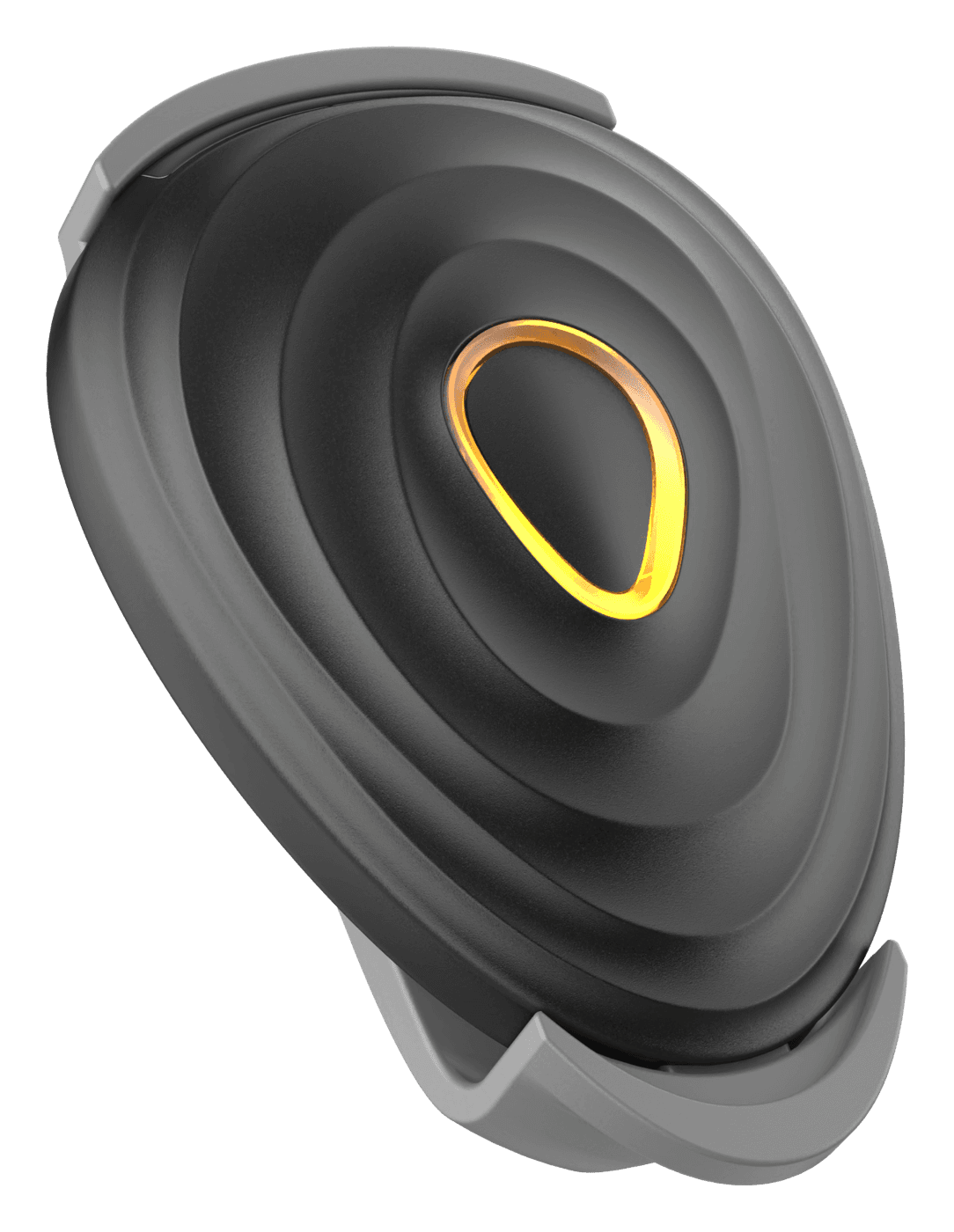
Bilateral balance metrics come with Stryd Duo 5.0. Know your load, manage it, and keep running.
More ways to run better.

Race Day Planning
Pace your goal race with weather, course, and form awareness.
Explore
Footpath & Shoe Choice
See your footpath in 3D, and how each shoe reshapes it.
Explore
Treadmill & Hybrid Fitness Racing
Accurate indoor pace for the treadmill and hybrid fitness races — no GPS needed.
Explore
Accurate Pace & Power
Run by effort, not by guesswork.
Explore
Personalized Drills
Drill routines tuned to your Form Profile.
Explore
Adaptive Training & Assistant
A plan that adapts daily, with an assistant that helps you make the call.
Explore